How to choose the best Airbnb management in Sydney
How to choose the best Airbnb management in Sydney
Compare Sydney Airbnb management options and learn what to look for. Find out why professionally managed properties earn more, and how to choose the best manager for your home.
With 16,928+ active listings and strong tourism demand, the Sydney short-term rental market is thriving. But with increasing competition and tighter rules such as a 180-day cap on unhosted properties, professional management can edge out self-managed properties, which can amount to a $19,200 difference annually.
A strong Airbnb manager should be able to show you how your property is performing and explain market trends that are driving them. Hometime does just that, which combines our Local Host model and market expertise with behind-the-scenes pricing and technology support. Hosts who switch typically see 36% improvements in booking conversion, better guest reviews, and significantly less time managing the property, all while earning more.
Drawing 3.6 million international visitors (more than any other Australian city) alongside 3.2 million domestic travellers in the year to March 2025, demand for travel to Sydney remains strong. Strong inbound numbers make the Sydney rental market one of the country's most reliable for short stays.
There are now more than 16,928 active listings, up 18% year-on-year as of March 2026. The market is competitive, with professionally-managed properties pulling ahead of the average. This means having the right management strategy in place is more important than ever.
This guide walks you through everything you need to know about Airbnb management in Sydney: what to look for, how to compare your options, and when it makes sense to switch.
The Sydney short-term rental landscape
Sydney attracts millions of visitors annually: business travellers, families, couples, tourists, event-goers. The demand throughout the year is real and consistent. But like any market, it's not flat: school breaks and summer holidays create spikes, particularly on New Year's Eve when prices peak just about everywhere in the city. Concert tours and sporting events create demand shifts in specific areas, too, which a skilled manager can capitalise on with peak season pricing strategies.
But it’s not just about seasonality. You also have to consider the Airbnb rules and regulations specific to the market, in particular the 180-day cap on unhosted properties in greater Sydney, which could limit your earnings without careful planning.
This makes local expertise crucial: demand can shift week to week depending on what's on, where it is, and who's visiting. Knowing how to balance longer stays on Airbnb with shorter ones is also important, as stays 21+ days or longer are exempted from the annual cap. Not responding quickly enough to these market fluctuations can affect how much you take home, and even put your listing at risk of suspension.
What to expect from a top Sydney Airbnb manager
Not every Airbnb management company in Sydney offers the same level of service. Some handle only listings and calendars, which can work if you’re local, already have trusted cleaners or tradespeople, and still want to run your own property. Full-service management, on the other hand, takes care of everything for you, which makes it a great fit for interstate investors, busy homeowners, and those who just want hands-off management.
Knowing the differences among operators is essential: a poor fit can cost you bookings, reviews, and revenue. It’s important to assess your needs, your goals, and how much you’re willing to pay to find the best match for you and your property.
At a minimum, the best Airbnb management in Sydney should include the following services:
Dynamic pricing and revenue management
24/7 guest support for check-ins, check-outs, and any emergencies
Professional cleaning and maintenance coordination, along with routine property checks
Listing management and multi-channel support
Owner reporting, available anytime
Compliance with Airbnb rules, platform policies, and building requirements
Are the fees worth it?
When comparing Airbnb management fees in Sydney, it’s important to take the whole picture into consideration: what may appear to be a cheaper option can end up costing you more if pricing isn’t optimised or guest issues aren’t resolved quickly enough. On the other hand, a more expensive option at first glance may lead to higher returns due to better services overall.
Make sure to ask questions like:
How do you structure your fees? Is it a one-off payment or do you charge per booking?
Do you charge any other fees on top of that?
Who shoulders the cleaning fees for my property?
How can I check how my property is doing?
Will my property be available for personal use?
How much involvement will I have on a day-to-day basis?
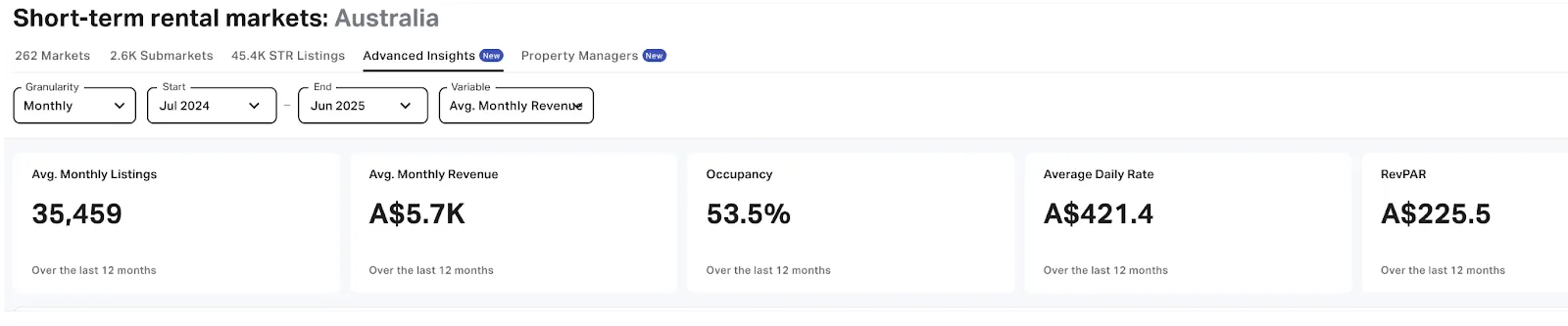
According to AirDNA, from July 2024 to June 2025, professionally managed short-term rentals in Australia earn, on average, 39% more in monthly revenue and achieve 43% higher average daily rates (ADR) compared to self-managed listings.
Professionally managed properties earn an average of $5.7k monthly revenue and $421.40 for the average daily rate.
Non-professionally managed properties earn an average of $4.1k monthly revenue and $294.30 for the average daily rate.
That adds up to an annual revenue loss of $19.2k for a non-managed property. While paying the fees might seem like a loss, it’s hard to ignore the financial gains when you compare the numbers between self-management vs professional Airbnb management.
What to ask before you sign
Before you commit to any Airbnb management company in Sydney, ask the following to ensure that you know what you’re going to get:
How do you price properties? How often do you adjust pricing?
How many homes do you manage in the area?
What’s the average occupancy and nightly rate for your portfolio in Sydney?
Who takes care of guest concerns, especially after hours?
Do I need to find my own cleaners or tradespersons?
How do you handle changes like new taxes or legislation for short-term rentals?
You should also read reviews for Airbnb management in Sydney, from both homeowners and guests. Strong reviews should mention transparency, responsiveness, and results.
Why Hometime stands out in Sydney
Hometime is Australia's largest short-term rental manager, and our approach is different to most. Rather than a centralised team operating from a distance, we work through a Local Host model: every Hometime property in Sydney is run by a Local Host who treats it like their own, taking personal responsibility for your home's care and guest experience. Meanwhile, Hometime offers behind-the-scenes support with technology and pricing systems to maximise returns.
What that means in practice for Sydney homeowners:
A 4.8/5 Airbnb guest rating. This reflects the quality and consistency of our guest communication, cleaning standards, and check-in experience across more than 3,500 properties in 30+ markets.
Australia's best short-term rental property manager in 2026.Hometime won at the STRive Awards, which recognises industry leaders for short-term rental professionals in Australia and New Zealand.
Dynamic pricing built around your property. We don't set rates and leave them. Instead, we track demand, adjust pricing around events and occupancy patterns, and aim to maximise what each property earns across the calendar.
Transparent reporting. You get clear visibility on how your property is performing: occupancy, revenue, guest feedback and more directly through our Owner Portal.
The best Airbnb management in Sydney combines local market knowledge with strong operational systems, with understanding of how demand moves across different suburbs during different times of the year. When your manager knows Sydney well, they make sharper decisions, constantly-adjusting strategies to properly capture the best rates at the time of booking and maximise occupancy year-round.
Take the 180-day limit for short stays, for example. Hometime leverages pricing strategies to balance longer bookings of 21+ days during off-peak seasons with shorter bookings at premium rates during peak seasons to maximise annual revenue while complying with the day limits.
When hosts switch to Hometime, we often see:
A 36% improvement in booking conversion thanks to better pricing and guest experience.
Improved ratings, which lead to more visibility on Airbnb.
Fewer cancellations and complaints from proactive guest support.
More positive guest reviews, building trust, and sustained long-term performance.
It’s not just about increasing your earnings, it’s also about doing more with your time. Self-managing hosts spend hours managing guests, pricing, cleaners, and maintenance. Hometime removes that workload completely, while only charging when bookings come in. You get better reviews, more income, and full visibility, minus the stress.
Sydney Case Study
Higher earnings and flexibility without the hassle
After moving to the countryside, David and Eric wanted to keep their beloved Potts Point apartment as a pied-à-terre whilst earning income when not in use. Living three hours from Sydney, they needed a professional partner they could trust.
With Hometime's Local Host Ween managing the property, they've enjoyed consistent occupancy, strong guest reviews, and the flexibility to use their apartment whenever they visit the city.
"Overall, we have earned more through having it on short-term rental than we would have if we just rented it even as a furnished apartment, but that wasn't our key consideration. It was really the availability of the apartment to us when we come to Sydney. If somebody's looking for a very polished, well-organised, professional organisation to manage their Airbnb, you actually could not go past Hometime."
Most full-service Airbnb management companies in Sydney charge a rate-based commission on your booking revenue. Some charge a flat percentage; others add separate fees for cleaning, linen or maintenance.
Hometime charges a one-off onboarding fee, which covers the costs of getting your property listing set up, including but not limited to; professional photography, lockboxes, and the first initial deep clean. From there, our pricing is charged on a percentage commission basis, so we only earn when you earn, meaning that we're 100% aligned to optimise your property for its best performance and highest yield potential. There is a separate cleaning fee, however this is paid for by the guest.
Is it worth using an Airbnb manager in Sydney?
For most owners, yes. A good manager takes care of guest communication, pricing, cleaning coordination, check-in and ongoing maintenance, all of which affect your reviews and revenue. Sydney's event-driven demand and 180-day cap on short stays also means there's real money to be made from smart, timely pricing adjustments that most owners wouldn't make on their own. The time saved and the consistency gained tend to be worth more than the commission fees.
What occupancy rate should I expect for a Sydney short-term rental?
Occupancy for short-term rentals in Sydney varies by suburb, property type, and time of year. Sydney's top suburbs typically have occupancy rates of 69-77% and ADRs between $220 and $352. Event periods like New Year’s, along with calendar planning to navigate Sydney’s 180-day limit, can push occupancy and nightly rates well above average. A manager who tracks demand patterns and adjusts pricing around these periods will typically outperform one who sets flat rates and leaves them.
How do I know if my Airbnb manager in Sydney is doing a good job?
The clearest indicators are occupancy rate, average nightly rate, revenue after costs, and your guest review score over time. A strong manager should be able to show you these numbers clearly and explain what's driving them. If you're regularly chasing updates, noticing a dip in review scores or feeling unsure whether your property is priced well, those are signs worth taking seriously.
Can I switch Airbnb managers in Sydney?
Yes, but check your existing contract for any exit conditions and make sure you have access to your listing, calendar, and owner portal. A new manager should be able to take over the listing and onboard your property without significant disruption to bookings.





.webp)